
Real estate marketing · Media strategy
A media strategy for real estate: from 3D visual to enquiry
A real estate media strategy defines who you want to reach, what they need to understand and which next step you offer. 3D visualisations give that story a recognisable identity, from the first project announcement to a conversation with the sales team.
For developers and property marketers, the challenge is often coordination rather than a shortage of images. A useful plan connects content, publishing dates and channels with the stage of the development and the questions prospective buyers are asking.
Be Present ·
01
Start with a concrete objective
Give each campaign a primary task: introducing a new development, bringing interested people to the project website or generating requests for a sales appointment. That choice informs the visual, supporting text and call to action.
Distinguish between short and longer timeframes. A launch needs visibility; the following weeks need detail. Decide which signals you will review, such as visits to project information, relevant questions or enquiries. Each publication then has a clear purpose.
02
Let each image answer a buyer’s question
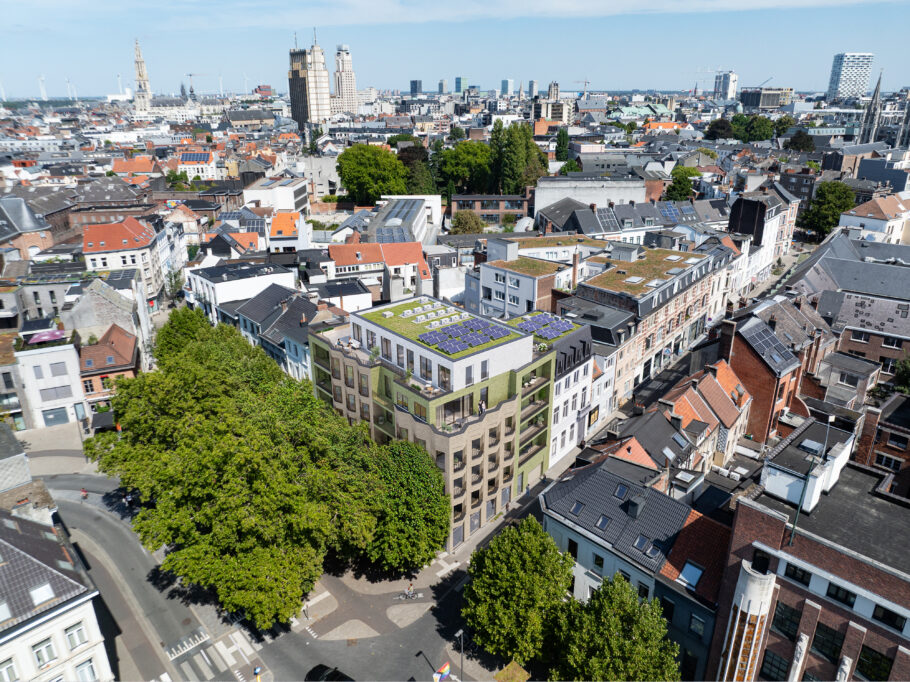
An exterior view explains the architecture. An interior shows light, materials and use. A floor plan clarifies the layout, while an aerial integration shows the location and surrounding neighbourhood. Choose the format that answers the question in front of you.
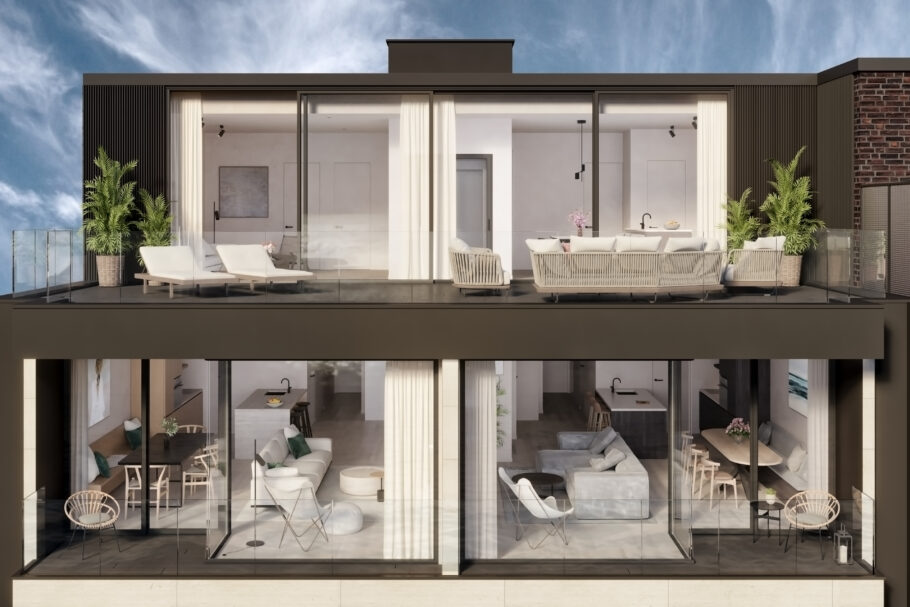
This visual brings the façade, terrace and living spaces into one view. It offers several subjects to explore without repeating the same message. When publishing, identify the building or home shown so that the image remains connected to useful project information.
03
Give each channel a clear role
The project website brings information together: visuals, plans, features and contact options. A social post can highlight one aspect and direct readers towards that detail. A newsletter can reconnect people who have requested updates with a relevant project development.
Select channels according to your audience and the time available to maintain them. For each one, ask: is my audience here, what information are they looking for, and can I offer an appropriate next step? A manageable set of well-maintained channels is a practical starting point.
04
Plan a sequence beyond the launch image
Build the story across successive moments. Start with the location, introduce the architecture, then explain the living experience and layout. Keep each instalment aligned with the current project information.
A simple schedule can record the subject, channel, image, format, publication date and person responsible for approval. Leave room for questions from interested buyers: these reveal gaps in the information. An animation can connect different viewpoints when movement explains more than a still image.
05
Keep imagery and information consistent
Use the same project name, approved materials and consistent descriptions across channels. Agree the required crops and aspect ratios before production. This helps keep the architecture legible on a project page and in a smaller social format.
If the design or availability changes, update the affected publications and files. Explain what a visualisation represents and which choices remain provisional. This gives the sales team a reliable starting point for a more detailed conversation.
06
Review the quality of the response
Look at which subjects take people to the relevant information and which questions follow. Reach and reactions provide context; relevant enquiries and conversations help you assess whether the content fits your intended audience. Compare publications with the same objective.
Use those observations to improve the next sequence. You may need a clearer floor plan, more information about the garden or a simpler contact step. The media strategy becomes a repeatable working process that develops alongside the project.
A practical start for your next campaign
- Choose one primary objective and a defined audience.
- Connect each image to a concrete buyer question.
- Plan content, formats and approvals together.
- Review relevant enquiries and improve missing information.
Which visuals does your property campaign need?
Share your project, audience and planned channels. We can help identify the 3D visuals that explain the development clearly.